
Hilton Wired Three AI Assistants. Checkout Still Lives on Hilton.com.
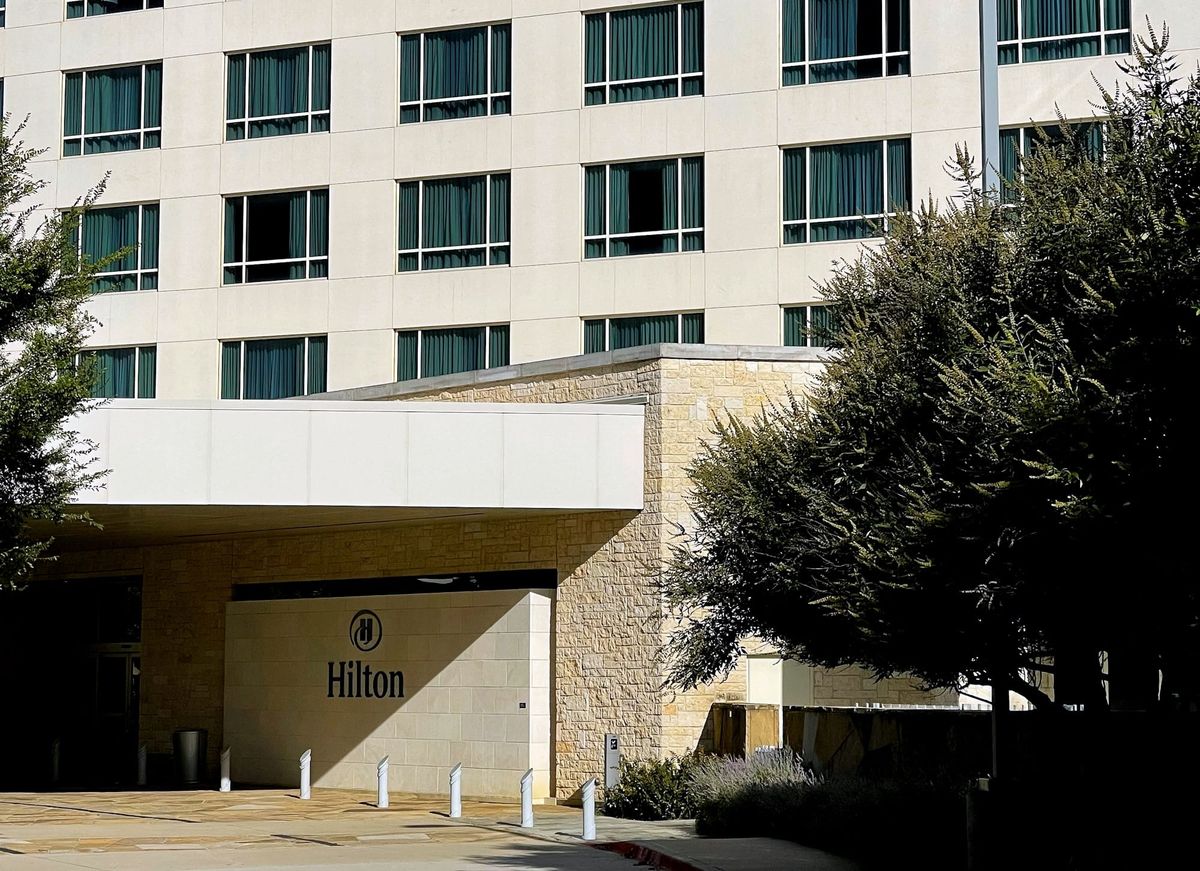
Google now lets a guest book a hotel inside the search conversation. Hilton joined that conversation on Google, ChatGPT, and Claude, then sent the booking back to its own site.
Google turned on hotel booking inside AI Mode last week. A guest in the United States can describe a trip, compare hotels, tap Continue on Google, pick a room, read the cancellation policy, and pay with Google Pay. The first group of partners is Booking.com, Choice Hotels, Expedia, Hilton, Hotels.com, IHG, Marriott, Priceline, Trip.com, and Wyndham. Google is not the merchant of record. The hotel or the booking platform is.
Hilton put out its own release four days later. It added an AI Planner on Hilton.com and is moving that tool into the Hilton Honors app. It hooked property search and Hilton Honors Points pricing into Google AI Mode. It added a ChatGPT plugin. It said a Claude connector is still being built. On every one of those paths, Hilton says the reservation closes on Hilton.com.
Hotel companies have been launching chat tools for two years. This one is different because the guest may never open a brand website. The planning happens inside an assistant she already uses. The open question is who gets the reservation when she is ready to pay.
What happened
Hilton described four places a guest can now talk to the brand.
The Hilton AI Planner sits on Hilton.com and is coming to the Honors app. A guest types what she wants from a trip and gets hotels that match. Hilton built it on its own property files and local activity data. Michael Leidinger, Hilton’s senior vice president and chief information officer, told investors the company has to work with Google, OpenAI, and Anthropic at the same time. He does not expect one model to win the whole market.
Google AI Mode will reach the most people. A guest can find Hilton hotels inside a search chat and ask for rooms she can buy with Hilton Honors Points. Hilton’s sample prompt is concrete: hotels in San Diego on points for the first weekend of September. When she wants to redeem, Hilton sends her to Hilton.com.
The ChatGPT plugin answers Hilton questions inside a chat that started somewhere else. Hotel facts and suggestions stay in the thread. The booking does not. Claude is not live. Hilton says the connector will pass photos, hotel details, and price.
Google’s travel post covers more ground than Hilton’s. Hotel booking in AI Mode is rolling out in the United States, in English. Points and miles pricing started with Choice, Hilton, and Wyndham on the hotel side. Accor and Hyatt are next. Next to those partners sits a Continue on Google button. The guest can finish the stay with Google Pay without leaving the chat.
Hilton is on Google’s partner list and still tells the guest to check out on Hilton.com. Those two facts sit next to each other. Leaders should not pretend they are the same product.
Why it matters
For twenty years the argument was about the OTA results page. The new argument is about a chat window. The guest asks a question she was going to ask anyway. The assistant returns a short list. If your hotel is on it, you have a shot. If it is missing, you do not get a second page of results. You get silence.
Hilton is spending to stay on that list without giving up the direct reservation or the Honors account. Chris Nassetta has said more than 80 percent of Hilton’s business already comes direct. The new hooks are there to keep that share from sliding as planning leaves brand sites.
The same AI Mode answer can send a Hilton room to Hilton.com and send a nearby room to an OTA checkout inside Google. Commission, guest data, and who handles the complaint follow the merchant of record. Google has said that will not be Google. It will be the partner. For a brand, that partner is either the brand or a company that bills the brand for the booking.
Points pricing changes the revenue meeting too. AI Mode can put a cash rate next to a points price in the same answer. Choice, Hilton, and Wyndham went first. The guest does not have to open a loyalty account to see the points number. She types a city and asks what the night costs in points. Members will like that. Revenue managers now have a public points comparable they did not publish and cannot pull down at 4 p.m.
Most of the coverage skipped the operations side. Leidinger has said Hilton’s messaging tool already handles about 55 percent of call-center chats and 36 percent of property chats, the basic ones such as breakfast hours. Another internal tool walks a hotel from opening through PIPs and relicensing. Reviewers have accepted about 80 percent of its licensing suggestions. A planner that holds a shopper on Hilton.com is a demand project. A bot that clears half the call-center queue is a labor project. If the board hears both as “AI spend,” it will fund the wrong one.
Independents and smaller flags have a worse version of this. Google’s first partners are the big chains and the big OTAs. Amadeus has said it is the first infrastructure firm wired into Google’s booking protocol. If the only way into the chat is a GDS or an OTA, the independent does not need a plugin. It needs clean property data: current rates, the real cancellation rule, fees that match the folio, and photos an assistant can use. Soft or conflicting listings will not get a debate. They will get dropped.
What hotel leaders should do next
This is a distribution and records problem. It is not a campaign.
This weekend, ask an assistant for a hotel in your market. Do it in Google AI Mode, in ChatGPT, and in Claude. Write down whether your hotel appears, what rate or points price comes back, whether the cancellation rule is current, and where the booking link goes. A general manager can finish that in an hour. It will beat most vendor decks.
Give one person the property record. Brand.com copy, the GDS description, the OTA listing, and the PMS rate plan are now the same feed. If those four disagree on parking, renovation dates, or the pet fee, the assistant will guess or skip you. That used to be a brand-standards nuisance. It is now how you get found.
Pick a checkout rule before a partner picks one for you. Hilton’s public stance is: show up everywhere, take the money on Hilton.com. Other chains on Google’s list may let more of the stay close inside the chat. Redirecting protects direct mix and the loyalty number on the reservation. Closing inside the assistant may catch the guest who will not click out. Asset managers should ask operators which mix they are defending, and what commission or lost Honors activity they will accept to hold it.
Keep guest tools and labor tools on separate budgets. A planner on the brand site is there to protect demand. A messaging model that eats half the call-center volume is there to protect wages and hours. Aimbridge this week launched LIFT, which ties forecasting, scheduling, and floor execution across its portfolio. Pilot hotels reported gains in housekeeping and laundry. Those projects have different owners and different scorecards. Lumping them under one “AI program” hides the work that actually moves GOP.
Treat the points price as a comparable, not a perk. If AI Mode puts your competitor’s cash rate next to your points cost, that number belongs in the weekly revenue packet. Franchisees will feel it first in upper-midscale and upscale, where Honors and Privileges rooms sit on top of each other and the guest is shopping a weekend, not a flag.
Plan for more than one assistant. Leidinger’s warning is the practical one. No single model owns this. Paying to show up in three chats has a cost. Staying out of all three has a cost too, and it will not arrive as a cancelled OTA contract. It will arrive as demand that never asked for your hotel by name.
What this comes down to
Hilton did not invent booking by chat. It refused to let the chat finish on a page it does not run.
The rest of the industry can stop asking whether to “use AI.” The live question is simpler. Can your hotel be found, described correctly, and sold on terms you accept when the guest never visits your site? That is already happening in the United States, in English, inside the search bar most of your customers already use.
Companies that keep property data, rate integrity, and checkout rules in one place will have an answer when the next assistant turns on. Companies that file last week under “Hilton news” will spend 2027 paying a third party to describe their own hotel.
Sources: Hilton corporate release, Aug. 28, 2026; Google AI Mode travel announcement, Aug. 27, 2026; Hotel Dive; hospitality.today; CIO Dive and Hilton earnings comments on the AI Planner, messaging, and lifecycle tools.

